
Key Takeaways
- Integrating sustainable features in custom homes enhances energy efficiency and environmental responsibility.
- Utilizing renewable energy sources and eco-friendly materials promotes long-term savings and superior comfort.
- Water conservation systems and smart home technologies are foundational to a sustainable lifestyle.
Table of Contents
- Energy-Efficient Design
- Renewable Energy Sources
- Sustainable Building Materials
- Water Conservation Systems
- Smart Home Technology
- Indoor Air Quality
- Landscaping and Exterior Design
- Certifications and Standards
Designing a new home provides the perfect opportunity to integrate environmentally conscious choices. As homeowners increasingly prioritize energy efficiency and long-term cost savings, sustainable building practices have moved from a niche trend to an essential consideration for custom homes. Not only do these features help protect the environment, but they also enhance comfort, health, and home value. In today’s ever-evolving housing market, buyers and builders alike are seeking resources and recommendations to ensure their new residences withstand the test of time while minimizing their ecological footprint.
Choosing the right designs and systems can lead to a home that’s more comfortable, efficient, and future-proof. Essential strategies, such as optimizing natural light, selecting renewable energy sources, and leveraging more innovative technology, can have a noticeable impact on household bills and your environmental legacy. Whether you’re building your dream home from the ground up or planning a significant renovation, incorporating these sustainable features is a wise investment.
Beyond the physical construction, approaching sustainability means considering the home’s entire lifecycle, from material sourcing to energy production and waste management. Incorporating efficient water conservation approaches or thoughtfully designed landscaping can further reduce environmental impact and ongoing expenses, making a sustainable home a practical choice for most climates and lifestyles.
Don’t overlook elements like durable roofing that supports insulation and maximizes the lifespan of your home structure. These decisions not only save money in the long run but also contribute to a healthy living space.
Energy-Efficient Design
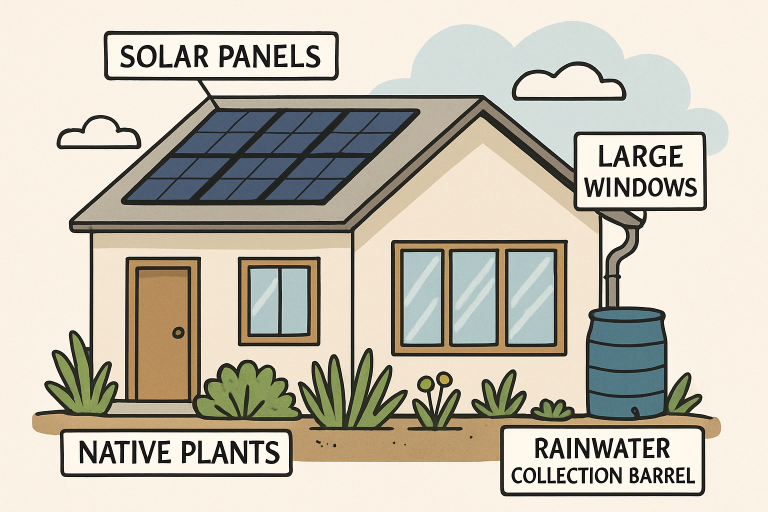
Energy efficiency begins with wise architectural choices. Positioning windows strategically allows ample natural daylight into the home, reducing reliance on electric lighting and lowering energy bills. Ample insulation in walls, roofs, and floors tightly seals the building envelope, minimizing heat loss in winter and keeping interiors cool in summer. Equally crucial, high-efficiency appliances and LED fixtures are now industry standards, slashing energy consumption and operational costs throughout the home’s life. According to The New York Times Wirecutter, properly installed insulation is among the most impactful upgrades for new homes.
Renewable Energy Sources
Today, homeowners can harness renewable energy to reduce their carbon footprint significantly. Solar photovoltaic (PV) panels have undergone significant evolution, characterized by lower installation costs and enhanced energy capture efficiency. For homes in suitable locations, geothermal heating and cooling systems present another attractive option, utilizing the earth’s stable sub-surface temperatures for both warmth and air conditioning. According to the U.S. Department of Energy, solar power generation is expanding rapidly nationwide, making it an excellent feature for future-ready custom homes.
Sustainable Building Materials
The materials builders use significantly impact a home’s environmental footprint. Recycled content materials, reclaimed timber, and low-VOC (volatile organic compound) paints are gaining popularity due to their reduced ecological footprint. Reclaimed wood, for example, offers warmth, story, and aesthetic distinction while keeping valuable resources out of landfills. Furthermore, low-VOC finishes help improve indoor air quality and protect the long-term health of occupants, an essential consideration for families and individuals alike.
Water Conservation Systems
Conserving water is essential for sustainability, especially in areas where water is a scarce resource. State-of-the-art custom homes often feature rainwater harvesting systems to collect and reuse rainwater for irrigation and non-potable needs. Greywater recycling systems repurpose shower or sink runoff for toilet flushing and landscaping. Low-flow faucets, toilets, and showerheads also dramatically reduce residential water use with little impact on everyday convenience.
Smart Home Technology
Smart home automation advances both sustainability and convenience. Modern thermostats can learn your schedule and adjust HVAC usage based on occupancy, while bright lighting and window coverings help maintain an optimal indoor environment and minimize wasted lighting energy. Integrated energy monitors and leak detectors provide homeowners with real-time data, enabling them to make informed decisions and prevent minor issues from escalating into costly repairs. For a closer look at how tech is redefining sustainable living, visit Consumer Reports.
Indoor Air Quality
The air inside a home can have a significant impact on health and wellness. Sustainable homes typically feature high-quality ventilation systems, often equipped with energy recovery ventilators, to bring in fresh air while maintaining efficiency. Choosing finishes and furnishings that emit minimal VOCs and contaminants is another essential factor. Additionally, incorporating indoor plants has been shown to absorb pollutants and contribute to a healthier indoor atmosphere.
Landscaping and Exterior Design
Eco-friendly outdoor design doesn’t just add beauty—it bolsters overall sustainability. Native plants, adapted to local climates, require less water and are more resistant to pests and diseases. Permeable pavers and green roofs help manage stormwater runoff while improving insulation on the home’s topmost layer. Thoughtful shading from trees or pergolas can naturally cool living spaces and extend living areas outdoors, all while supporting local wildlife and biodiversity.
Certifications and Standards
Green building certifications, such as LEED, ENERGY STAR, and the National Green Building Standard (NGBS), set guidelines for energy, water, and resource efficiency. Certification serves as a proven benchmark for sustainable performance, boosting a home’s value and appealing to eco-conscious buyers. Meeting these standards often means lower utility bills, improved comfort, and confidence in the longevity of your investment. For current details on certification processes, visit the U.S. Green Building Council website.
Incorporating these sustainable features in your custom home ensures lower long-term costs, greater comfort, and a reduced environmental impact. Thoughtful planning today sets the stage for greener living and a brighter tomorrow.