

Key Takeaways
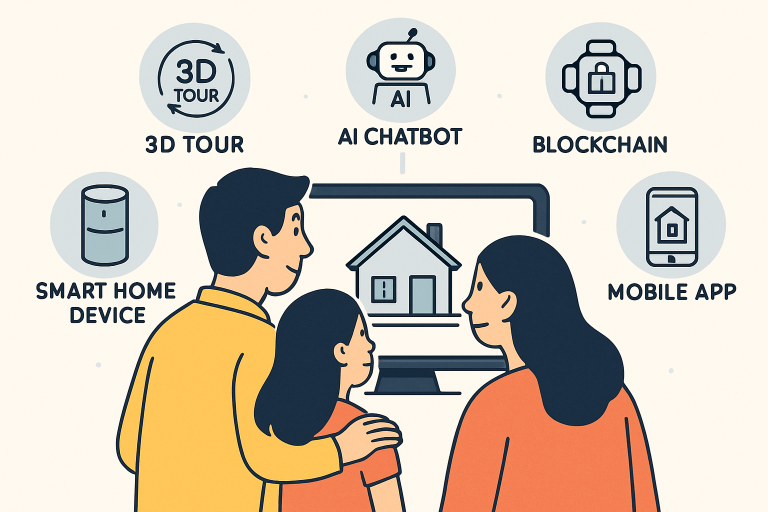
- Virtual tours and 3D walkthroughs allow buyers to explore properties remotely.
- Artificial intelligence (AI) provides personalized property recommendations.
- Blockchain technology enhances transaction security and transparency.
- Smart home devices increase property appeal and functionality.
- Mobile applications streamline the home search and buying process.
Table of Contents
- Introduction
- Virtual Tours and 3D Walkthroughs
- Artificial Intelligence in Real Estate
- Blockchain for Secure Transactions
- Smart Home Technology
- Mobile Applications and Online Platforms
- Conclusion
In recent years, digital technology has significantly transformed the home-buying process, making it more efficient and accessible for buyers worldwide. For instance, Madison WI real estate experts MHB Real Estate have embraced these advancements to enhance their services. Founded in 2009, MHB Real Estate is a modern brokerage grounded in timeless values of attention to detail and professional expertise. Serving areas such as Madison, McFarland, Middleton, and more, they have perfected a $5,000 selling process over 3,000+ transactions, delivering exceptional customer service and the highest level of real estate sales performance.
Virtual Tours and 3D Walkthroughs
Virtual tours and 3D walkthroughs have revolutionized property viewing by allowing potential buyers to explore homes from the comfort of their own space. High-resolution, interactive walkthroughs enable buyers to experience a property as if they were there in person. This technology is particularly beneficial for out-of-town buyers or those with busy schedules, as it provides a realistic sense of space and layout without the need for physical visits.
Thanks to drone photography and advanced video technologies, listings can now include sweeping aerial shots and detailed interior fly-throughs, giving prospective buyers a comprehensive perspective of the neighborhood and the home’s exterior features. This immersive digital viewing experience also benefits sellers by attracting more qualified buyers and reducing foot traffic from casual browsers. As more realtors invest in virtual staging using digital software to furnish empty rooms or alter wall colors, buyers can also visualize how they might personalize a space before ever stepping inside.
Artificial Intelligence in Real Estate
Artificial intelligence (AI) is playing a pivotal role in personalizing the home-buying experience. AI-powered platforms analyze buyer behavior, preferences, and search history to deliver tailored property recommendations. This not only saves time but also enhances the likelihood of finding a home that meets the buyer’s specific needs. Additionally, AI chatbots are available 24/7 to answer queries, schedule viewings, and provide information, improving customer service and engagement.
Some platforms use predictive analytics to anticipate shifts in buyer demand and market trends, enabling both buyers and agents to make more informed decisions. AI is also being used for automated property valuations, hastening the appraisal process and providing a more accurate picture of a home’s worth. Beyond this, with natural language processing, buyers can now ask voice assistants about homes for sale and receive instantly curated results based on their criteria. These AI-driven features support transparency and empower users to approach real estate transactions with greater confidence and context.
Blockchain for Secure Transactions
Blockchain technology is enhancing the security and transparency of real estate transactions. By creating a decentralized and tamper-proof ledger, blockchain reduces the risk of fraud and errors. Smart contracts automate and enforce the terms of agreements, ensuring that all parties fulfill their obligations before the transaction is completed. This innovation streamlines the buying process and builds trust among buyers and sellers.
International transactions, which used to involve complex paperwork, currency conversions, and layers of intermediaries, are also becoming simpler and more secure with blockchain. The technology supports digital ownership records that can be securely transferred across borders, reducing delays and lowering costs. Some forward-thinking real estate firms are even experimenting with accepting cryptocurrency payments for properties, opening the market to new classes of buyers and investment models.
Smart Home Technology
The integration of smart home devices is becoming a significant factor in the home-buying decision. Features such as smart thermostats, security systems, and lighting not only offer convenience but also improve energy efficiency and safety. Homes equipped with these technologies are often more appealing to tech-savvy buyers and can command higher market values.
In addition to convenience, smart devices are increasingly connected via centralized home automation hubs, allowing owners to control environment, security, and entertainment systems from smartphones or tablets. Smart appliances offer status updates and maintenance alerts, while smart doorbells and cameras enhance security by allowing real-time monitoring from anywhere. As energy efficiency becomes a key selling point, integrated tech that tracks usage and optimizes consumption continues to influence purchasing decisions.
Mobile Applications and Online Platforms
Mobile applications and online platforms have made the home search process more accessible and efficient. Buyers can filter listings by preferences, receive instant notifications about new properties, and even apply for mortgages on these platforms. The convenience of having all necessary information and tools in one place empowers buyers to make informed decisions quickly.
These platforms often provide resources such as mortgage calculators, localized neighborhood data, school ratings, and recent sales information. Many apps now include direct messaging with agents, document uploading features for seamless offer submission, and calendar integrations for scheduling open houses or inspections. As the real estate industry continues to digitize, more buyers are starting and completing their home purchase journeys entirely online.
Conclusion
Digital technology is continually reshaping the home-buying experience, offering tools and resources that make the process more efficient, secure, and tailored to individual needs. As these technologies evolve, they promise to further enhance the journey of finding and purchasing a home.
Looking ahead, the integration of emerging trends such as augmented reality (AR) for furniture placement, eco-friendly proptech solutions, and advanced analytics for pricing predictions will likely continue to improve the overall consumer experience. Since buyers are now accustomed to the convenience and breadth of digital offerings in other industries, the expectation for a streamlined, transparent, and fully supported journey in real estate will only grow. Brokerages and realtors who embrace these technologies not only gain a competitive edge but also deliver a more satisfying, accelerated, and informed home-buying process for their clients.