
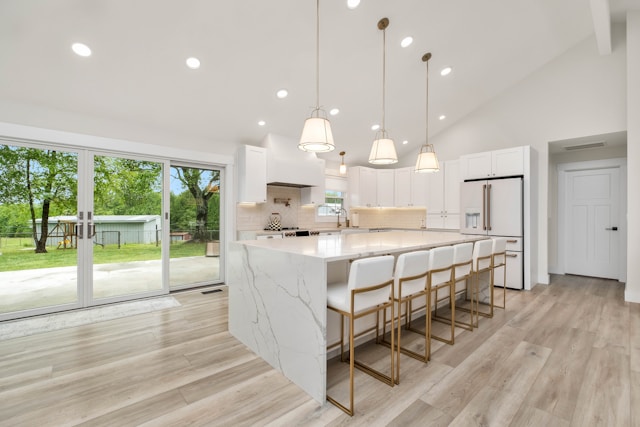
Creating an aesthetically pleasing and highly functional kitchen requires a delicate balance of creativity and practicality. In contemporary design, this balance involves understanding spatial dynamics, material selection, and technology integration. Modern kitchen design transcends mere functionality; it reflects lifestyle choices and personal tastes while accommodating the demands of everyday cooking and entertaining. Designers draw on principles from architecture and ergonomics to craft spaces that are not only visually striking but also promote efficiency and comfort. As trends evolve, the focus shifts toward innovative solutions that embrace sustainability, smart home integration, and multifunctional spaces, making the kitchen a true heart of the home.
Basics to Modern Kitchen Design
The kitchen is often regarded as the heart of the home. It serves as more than just a place for culinary activities; it’s a center for family gatherings, social interactions, and even work-from-home setups. Modern kitchen design has had to adapt to these multifaceted roles. Whether considering something specific, like a dishwasher installation Washington DC, or an entire kitchen makeover, understanding contemporary design principles is critical to creating a versatile space that suits your lifestyle.
The need for kitchens that seamlessly blend with living and dining areas has increased as homes become more open-concept. This shift toward multipurpose functionality emphasizes aesthetics as much as it does usability. These transformative design trends reshape kitchens and enhance our daily lives by making spaces more liveable and convenient.
Critical Elements of Contemporary Kitchens
When it comes to modern kitchens, a few elements are considered essential. Open space and minimalism stand at the forefront of design preferences, reflecting a move away from cluttered and overly ornate styles. Emphasis is placed on maximizing efficiency through innovative storage solutions and thoughtful layout planning. This often includes taking advantage of vertical space with tall cabinets or open shelving, which makes the kitchen more airy and less confined.
Moreover, modern kitchens increasingly incorporate high-quality, aesthetically pleasing, and durable materials. For instance, quartz and granite countertops are popular not only for their beauty but also for their resilience. These spaces often feature a neutral color palette with occasional pops of color or texture to add visual interest. The result is a clean, streamlined look that doesn’t sacrifice functionality for style.
The Role of Technology in Kitchen Spaces
Today’s kitchens are smarter than ever, thanks to technological advancements that have seeped into every corner of the home, making life significantly easier. Technology is crucial in modern kitchen design, from smart refrigerators that can monitor expiry dates to voice-activated assistants that can modify cooking instructions. An insightful article about how smart kitchens are evolving highlights these technological leaps.
Widespread Wi-Fi connectivity allows for seamless integration of various electronic devices, turning your kitchen into a mini smart home. These innovations save time and enhance cooking experiences by offering precision and control unprecedented in traditional kitchen setups. With rising consumer interest in tech-savvy solutions, smart kitchens are fast becoming a standard.
Balancing Aesthetics with Functionality
Achieving the perfect kitchen requires balancing aesthetic appeal and practical utility. It’s not enough for a kitchen to look beautiful; it must also serve its purpose efficiently. This is where strategic planning comes into play. Countertops, appliances, and storage options must be chosen for their looks and ability to withstand daily use and facilitate easy maintenance.
Practical organization is crucial in achieving this balance. Invisible storage compartments, pull-out pantries, and corner carousel units can significantly enhance functionality without compromising design. Thoughtful choices in layout ensure that frequently used items are within easy reach, making cooking a seamless and enjoyable process.